
Sonic Mania Plus - NETFLIX
Netflix, Inc.Action
4.51.52K Reviews
- Version
- 5.5.3
- Installs
- 5.00M
- Age Rating
- Everyone
Screenshots
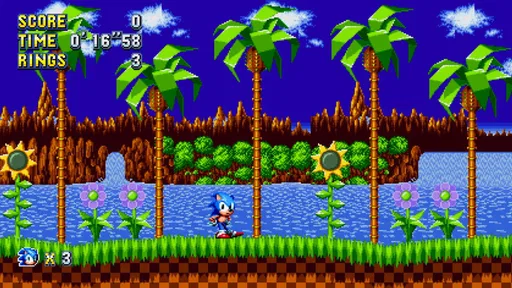
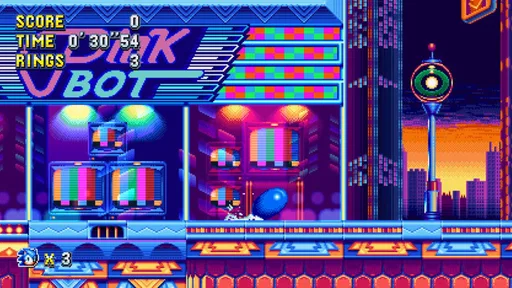
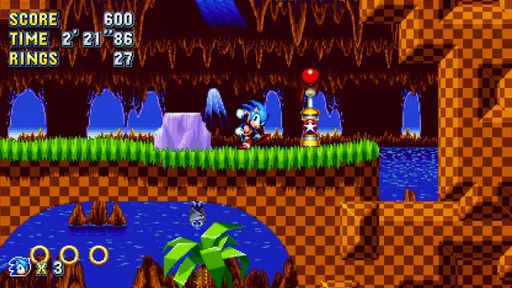
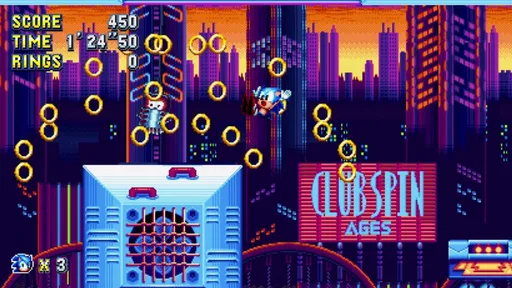
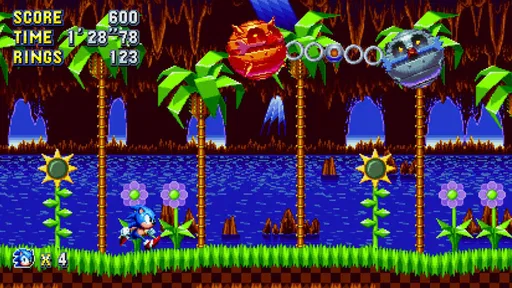
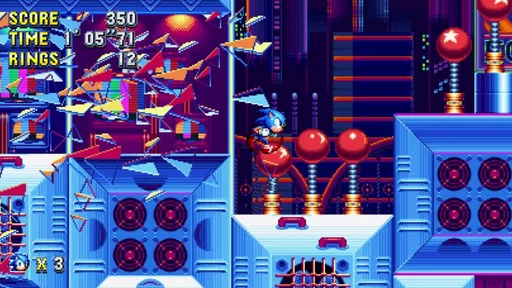
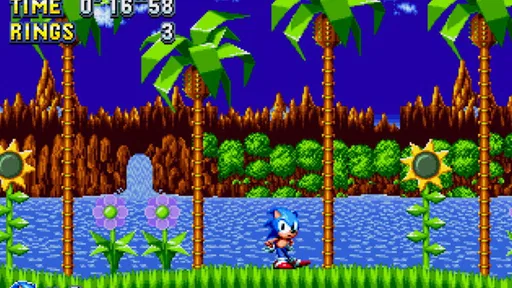
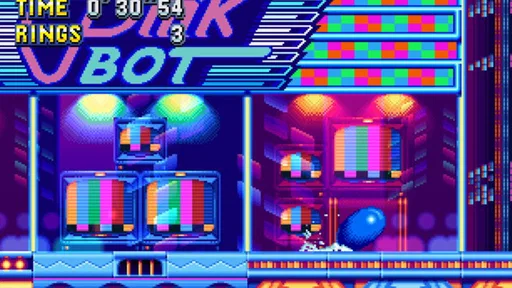
Our Review of Sonic Mania Plus - NETFLIX
 Analysis by Appyee
I expected Sonic Mania Plus to be a quick burst of familiar speed, but my first sessions quickly showed a more carefully balanced action platformer. It looks back to the classic SEGA style without feeling like a simple museum piece. The bright scenery, sharp character animation, energetic music, and stop-start rhythm all work together to make each stage feel like a playable piece of retro game design rather than a collection of old references.
This is a free game from Netflix, Inc., and it sits firmly in the action category. It is aimed at Everyone, runs on Android 8.0 or later, and the current version is 5.5.3. Those details matter less than the way it feels in the hands, though. I found that the real appeal is not just moving quickly; it is learning when to accelerate, when to brake, and when to explore instead of following the most obvious route.
Why the first few stages work so well
The opening impression is immediate. Sonic Mania Plus uses bold colors, chunky pixel art, and readable shapes to create a world that is easy to understand even when the screen becomes busy. Platforms stand out, hazards have clear silhouettes, and interactive objects look distinct from the background. That clarity is essential in a fast platformer, because I rarely want to pause and decode what I am seeing while moving at speed.
What surprised me is how much the game depends on contrast. A bright, open stretch encourages a fast run, but the next section may narrow the path or place an obstacle where careless momentum becomes a problem. The visual design prepares me for those changes without explaining them with long instructions. I learn by reading the environment, which makes successful movement feel earned.
The game also understands the value of a strong first attempt. A new player can move forward almost immediately, while a returning fan will notice alternate routes, hidden spaces, and small opportunities to improve a run. That gives the stages two layers: a straightforward path for casual play and a more demanding route for anyone willing to replay and experiment.
I would not describe the pacing as permanently frantic. That would make the experience exhausting and would weaken the impact of its fastest moments. Instead, the stages alternate between flowing movement, compact platforming challenges, and moments where I need to wait for a safe opening. This variation is one of the reasons the game remains inviting after the novelty of its retro appearance fades.
There is also a useful sense of physical consequence. A bad jump or reckless dash can interrupt a run, but the failure usually teaches me something specific about timing or positioning. I rarely felt that the game was punishing me for reasons I could not understand. The important distinction is that speed is available, not mandatory. I can play aggressively, but I can also slow down when the level is asking for accuracy.
A world built from visual grammar
The settings communicate through a familiar visual language: strong color blocks, animated scenery, mechanical structures, and recognizable platforming shapes. Even without reading instructions, I can usually guess which surfaces are safe, which objects are dangerous, and which elements deserve attention. That is a major strength on a mobile screen, where clutter can quickly turn into frustration.
The art direction does more than imitate an older era. It uses retro presentation to support gameplay. Backgrounds provide atmosphere without overpowering the foreground, and animated details make the stages feel active without hiding the route. I especially appreciate how the game avoids making every part of the scenery equally loud. The important information remains readable while the world still feels lively.
That balance helps the setting feel coherent. The environments are not just decorative themes placed around identical challenges. Their shapes and visual cues influence how I approach them. A more open area invites momentum and curiosity, while a tighter mechanical section makes me watch the floor, walls, and timing more carefully. The world tells me how to play before the controls fully do.
Exploration is another part of the visual design. Alternate passages are often suggested by the shape of the terrain or by an unusual opening rather than announced with a large marker. I found myself scanning ahead while running, then replaying a section to test whether a suspicious gap led somewhere useful. This creates a nice trade-off: rushing can be satisfying, but slowing down may reveal a better route or a more complete understanding of the stage.
For younger players, the clear shapes and colorful presentation make the action approachable. For experienced players, the same clarity becomes a tool for optimization. I can start by simply reaching the end, then return with a more deliberate plan for movement. That gradual shift from recognition to mastery is more substantial than the short store summary suggests.
Sound that shapes the pace
The music is not background decoration in my experience. It gives the stages their emotional identity and helps maintain forward motion. The upbeat sound supports a confident run, while changes in the environment and action create moments where the rhythm feels more restrained. I notice the music most when I stop playing, because the stages lose some of their personality without it.
Good platforming sound design should make movement feel connected, and this game generally achieves that effect. Jumps, impacts, pickups, and environmental interactions contribute to a sense of timing. I do not rely on audio alone, but it reinforces what I see and makes successful movement feel more satisfying. When a sequence flows well, the visual motion and sound seem to lock together.
That connection also affects pacing. A fast section feels like a musical phrase building toward a release, while a slower obstacle sequence creates a pause before the next burst. The game benefits from not treating every second as a race. If the soundtrack were constantly pushing at maximum intensity, the action would become tiring and the quieter sections would lose their purpose.
I found this especially useful during repeat attempts. On a first run, my attention is focused on discovering the route. On later runs, the music becomes part of the routine, helping me settle into a rhythm while I refine jumps and movement. This is one reason the game can remain enjoyable even when I am revisiting familiar stages rather than seeing new scenery.
There is a practical caveat for mobile play. The experience is more expressive with sound enabled, but I do not always want audio in public or during a short break. The visual feedback is strong enough to make the game playable quietly, although the atmosphere is less complete. If I were introducing it to someone, I would recommend trying the first sessions with sound before deciding whether silent play suits them.
Where speed meets control
The central mechanical challenge is not simply holding a direction and hoping the level carries me forward. Sonic Mania Plus gives me speed, but it also asks me to manage that speed. Momentum can help clear a section quickly, yet it can also send me into danger if I enter a jump without checking what comes next. The most satisfying moments come when I maintain flow while still making conscious decisions.
That makes the game a good fit for players who enjoy learning through repetition. I often complete a section, remember where I lost control, and try again with a different approach. A second attempt may involve slowing down before a jump, taking a higher path, or resisting the urge to continue accelerating. The improvement is easy to feel because the same stage can change character once I understand its structure.
New players should not assume that they need perfect reflexes from the beginning. The game gives enough visual information to learn its patterns, and the early experience can be approached at a comfortable pace. The harder part is accepting that speed is a tool rather than the only correct way to play. Once I stopped treating every open stretch as a command to rush, the platforming became more manageable.
On the other hand, players looking for a relaxed, low-attention game may find the constant need to watch the route tiring. Even familiar areas can demand concentration when hazards are arranged around momentum. This is not the best choice for someone who wants to keep one eye on another task. It rewards presence, especially when I am chasing a cleaner run rather than merely reaching the next checkpoint.
The mobile format introduces another consideration: control comfort. Fast platforming is sensitive to small inputs, so the game feels best when I have a stable grip and a screen free from distractions. Short sessions work well, but I would not judge my ability after playing while walking, commuting in a crowded space, or using a cramped posture. The game asks for enough precision that the surrounding situation can affect the experience.
One useful approach is to separate learning sessions from improvement sessions. During the first pass, I focus on identifying hazards and routes rather than trying to move perfectly. Later, I replay with one goal at a time: keep momentum through a particular section, find an alternate passage, or reduce unnecessary stops. This prevents the game from becoming a vague test of reflexes and turns it into a series of manageable experiments.
What replaying reveals
The strongest reason to return is not only completion. The stages are designed to make me curious about what I missed. A route that seemed obvious on the first attempt may reveal another possibility once I recognize the layout. I begin to read the level in advance, looking for slopes, openings, height changes, and visual hints that suggest a different way forward.
This creates a meaningful distinction between finishing and mastering. Finishing is accessible: I can move through the stage, react to the major obstacles, and enjoy the spectacle. Mastering requires a more deliberate relationship with the level. I need to remember its rhythm, understand where speed helps, and decide which risks are worth taking.
That structure makes the game useful in different everyday situations. If I have only a few minutes, I can play a short section and enjoy the immediate movement. If I have a longer break, I can work on a stage that previously caused trouble. The same content supports casual play and focused practice without needing a separate mode to justify each session.
I also like that replaying changes my attention. At first, I watch Sonic and react. Later, I watch the space ahead and prepare. That shift is subtle but important. It is the difference between surviving a platformer and understanding its design. The game becomes less about frantic correction and more about predicting the next movement.
Still, the appeal of replay depends on whether a player enjoys self-improvement. Someone who wants a constantly changing stream of content may find the structure limited compared with a larger modern action game. This is a focused platformer, not an endless service built around frequent novelty. Its value comes from refinement, route discovery, and the pleasure of becoming more consistent.
How it compares with other mobile action games
Compared with many free action games on mobile, this one feels unusually concentrated. It does not need a large map, a long checklist, or a complicated progression layer to hold my attention. The core loop is direct: enter a stage, read the environment, move through it, learn from mistakes, and return with better control. That simplicity is refreshing when other games make the player manage several systems before the action becomes interesting.
It is also different from endless runners. Both can involve speed and quick reactions, but Sonic Mania Plus gives me more agency over how I approach a space. I am not merely reacting to an automatically advancing track. I can choose when to slow down, explore a route, or build momentum. That makes the experience more demanding, but also more rewarding for players who want their decisions to shape the run.
Against slower puzzle-platformers, the trade-off goes the other way. This game offers more energy and flow, but less time to analyze every move. If I prefer carefully planning each jump with no pressure, another platformer may suit me better. If I want movement to feel expressive and physical, this is the stronger option.
Its retro identity will also divide players. I think the pixel-art presentation, classic sound, and familiar sense of speed form a coherent mood rather than a superficial costume. However, anyone who prefers modern three-dimensional visuals or cinematic storytelling may see the old-school approach as too narrow. The game is confident about what it wants to be, and that means it will not appeal equally to every action fan.
Small habits that improve the experience
I recommend starting with a comfortable grip and treating the first run as reconnaissance. Trying to play perfectly immediately can make the game feel harsher than it is. Once I know where the stage changes rhythm, I can decide whether to prioritize safety, speed, or exploration.
Another useful habit is to look beyond the character. The best decisions often come from reading the next part of the route before reaching it. Watching the terrain ahead gives me time to prepare for a jump or reduce momentum. This is more reliable than reacting at the last instant, especially in sections where the camera and level layout move quickly together.
I also find it helpful to replay a troublesome passage with a single question in mind: was the mistake caused by poor timing, excessive speed, or choosing the wrong line? Those problems feel similar when I fail, but they require different solutions. Separating them makes practice more efficient and helps prevent random retries.
Finally, I would avoid judging the game solely by the first completion. The visual style is immediately noticeable, but the deeper appeal appears when I revisit a stage and recognize details I ignored. The game rewards attention over time, particularly when I stop treating its routes as fixed corridors and start seeing them as spaces with different possible rhythms.
Who should play it and who should pass
I would recommend it to anyone who enjoys classic action platforming, especially players who like the feeling of improving through repeated attempts. It is a strong choice for short mobile sessions because the controls and objective are direct, but it can also support longer play when I want to refine a route or explore a stage more thoroughly.
It is particularly suitable for fans of retro presentation who still want mechanics to matter. The art and music create a strong mood, but they never replace the need to control momentum and read hazards. That combination makes the game feel more complete than a nostalgia trip built only from familiar colors and sounds.
I would suggest skipping it if you want a passive experience, a large narrative campaign, or a constantly changing open-world structure. I would also be cautious if fast platforming usually feels stressful rather than satisfying. The game is generous in its visual communication, but it still expects attention and repeated practice.
The fact that it is free makes trying it easier, and Netflix, Inc. gives it a recognizable home in the mobile catalog. It has an average rating of 4.5 from around 50 thousand ratings, with roughly 1.5 thousand written reviews, and it has passed 5 million installs. Those figures suggest a substantial audience, but my recommendation rests more on the quality of the moment-to-moment play than on popularity.
A coherent retro mood with real mechanical weight
After spending time with it, I think the best description is not simply “a retro SEGA platformer.” The important achievement is how consistently the presentation and mechanics support one another. The art makes routes readable, the sound gives movement a pulse, the settings shape the way I approach each section, and the pacing knows when to let speed take over and when to demand restraint.
That coherence is why the game feels good even when I fail. I understand what the stage was asking from me, and I can usually identify the decision that went wrong. The frustration is therefore productive rather than vague. I want to try again because I can imagine a better line through the level, not because the game is simply withholding progress.
My final view is positive, with one clear condition: you need to enjoy active play. Sonic Mania Plus is not trying to be the broadest mobile action game, and it does not need to be. It focuses on momentum, readable platforming, expressive retro presentation, and the satisfaction of gradually turning a messy run into a smooth one.
For me, that focus is its greatest strength. I can pick it up for a brief break, play quietly if necessary, or settle in with sound and give a familiar stage my full attention. The result is a game that feels energetic without being mindlessly frantic. If you want a free action platformer where atmosphere and movement reinforce each other, this is an easy recommendation.
Verdict
Strengths of Sonic Mania Plus - NETFLIX
- Faithful recreation of classic Sonic gameplay with polished modern presentation.
- Includes multiple playable characters with distinct abilities and playstyles.
- Encore Mode adds remixed stages, new challenges, and character-switching mechanics.
- Offline play is available, making it convenient for travel or limited connections.
- Netflix membership includes the game without extra purchases or advertisements.
Limitations of Sonic Mania Plus - NETFLIX
- Requires an active Netflix subscription and compatible account to access the game.
- Fast-paced levels can feel difficult until controls and routes become familiar.
- Some optional collectibles demand precise platforming and repeated attempts.
- Large visual effects may occasionally make hazards harder to spot on small screens.
- Progress and availability may depend on Netflix account and device compatibility.
Other Releases by Netflix, Inc.
View All
Netflix
Entertainment4.8

Bloons TD 6 NETFLIX
Strategy4.6

Football Manager 26 Mobile
Sports4.3

Toca Boca Hair Salon 4 NETFLIX
Educational4.5
Similar Picks in This Category
View All
Temple Run 2: Endless Escape
Imangi Studios4.1

PUBG MOBILE
Level Infinite4.3

Free Fire: 9th Anniversary
GARENA INTERNATIONAL I4.4

Talking Tom: Hero Dash Run
Outfit7 Limited4.3

slither.io
Lowtech Studios3.9

Sniper 3D:Gun Shooting Games
Wildlife Studios4.6
Frequently Asked Questions
What is Sonic Mania Plus - NETFLIX?
Sonic Mania Plus - NETFLIX is a retro-style platform game available through Netflix Games for supported Android and iOS devices. It brings classic Sonic gameplay into a polished modern package, featuring fast side-scrolling levels, familiar characters, collectible rings, hidden routes, boss encounters, and colorful pixel-art visuals. The game is designed for players who enjoy the original 2D Sonic formula without advertisements or separate in-game purchases.
Do I need a Netflix subscription to play Sonic Mania Plus?
Yes. Access to Sonic Mania Plus - NETFLIX requires an active Netflix membership, because the game is distributed through the Netflix Games service. You generally sign in with your Netflix account before downloading or launching it. The game does not normally require an additional purchase, but availability can depend on your country, subscription status, device compatibility, and whether Netflix Games is supported on your particular phone or tablet.
Can Sonic Mania Plus - NETFLIX be played offline?
Sonic Mania Plus - NETFLIX is suitable for offline play after the game has been installed and any required account verification or initial setup has been completed. This makes it convenient for travel, commuting, or areas with unreliable internet access. However, you may occasionally need an internet connection to confirm your Netflix membership, download updates, restore access, or complete certain account-related checks.
What characters and gameplay modes are included?
The game focuses on classic Sonic-style platforming and includes several playable characters with different abilities, such as Sonic, Tails, and Knuckles. Each character changes how you approach obstacles, exploration, and secret areas. Sonic Mania Plus is known for its numerous stages, remixed zones, special stages, time-based challenges, and additional content that gives the experience more variety than a straightforward run from beginning to end.
Is Sonic Mania Plus - NETFLIX suitable for children and casual players?
Yes, the game is generally appropriate for children and casual players who enjoy colorful arcade platformers. Its controls are easy to understand, but later stages and boss battles can become demanding, especially when precise movement and quick reactions are required. There is no advertising or gambling-focused monetization in the Netflix version. Parents should still check the game’s age rating and Netflix account settings before allowing access.
Play our best games!


